The Buddhism has two basic principles. One is the Four Noble Truths, in which the Buddha diagnoses the problem of suffering and the solution to this problem. The other is the Noble Eightfold Path, the practical discipline to destroy the causes of suffering. Eight fold path is the practical application of the four noble truths. It is also closely connected to the fourth noble truth as a means to end the suffering.
The Eightfold Path consists of eight practices:
- Right view
- Right intention (aspirations)
- Right speech
- Right action (conduct)
- Right livelihood
- Right effort
- Right mindfulness (awareness)
- Right concentration
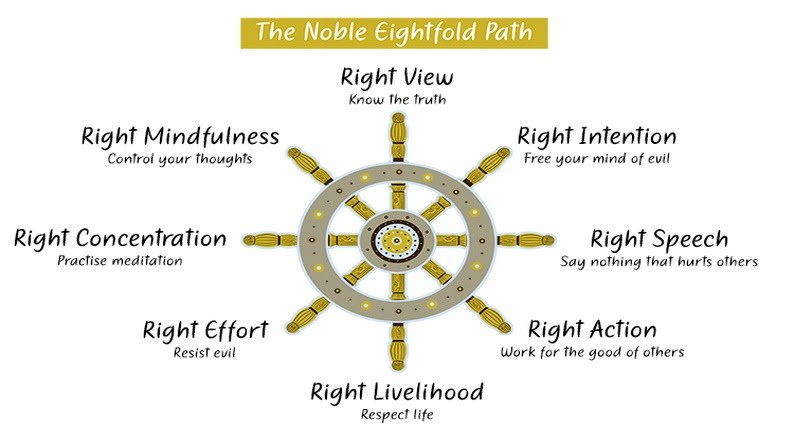
Right View (Samyak-dristi): The concept of Right View is about the awareness of what is true and right.It consists of the grasp and acceptance of the four noble truths, rejection of the fault doctrines, and avoidance of immorality resulting from lying, violence, etc.
Right Intentions (Samyak-sankalpa): Right Intentions (Aspiration) is focused on the right subjects–the ones that matter. It controls the direction of our life and the way we will live it. It includes a right understanding of the need to live and act in perfect accordance with the highest standards. It implies thought on renunciation, thought on friendship and good will, and thoughts on non-harming.
Right Speech (Samyak-vac): It inspires one to speak truth primarily, and to speak gentle and soothing words for the benefit and wellbeing of others. It also spreads one to avoid falsehood, slander, harsh words and gossip. Right speech does not allow of discrepancy between thought and word. Particularly it does not allow anyone to think unkind and harmful thoughts inwardly while speaking pacifically outwardly
Right Actions (Samyak-karma): The Buddha intends by right Intentions (conduct) the practice of five moral vows namely, non-violence(ahimsa), truthfulness(satya), non-stealing(asteya), no immorality, and no intoxication.
Right Livelihood (Samyak-ajiva): It consists of the avoidance of a luxurious life and the acceptance of occupations which do not involve cruelty and injury to other living beings. The Buddha exhorts to avoid occupations like sale of alcohol, making and selling weapons, profession of the soldier, butcher, fisherman, etc.
Right Effort (Samyak-vyayama): It includes the effort to avoid the rise of evil and false ideas in the mind, the effort to overcome evil and evil tendencies, the effort to acquire positive values like attention, energy, tranquility, equanimity, and concentration, and the effort to maintain the right conditions for a meritorious life.
Right Effort (vyayama) can also be translated as Right Endeavor. It is both doing the right thing and doing it in the right way. This includes action and acting in the right and beneficial and dharmic way.
Right Mindfulness (Samyak-Smrti): It represents the mindfulness of the body (breathing positions, movements, impurities of the body, etc.), awareness of sensations (attentive to the feelings of oneself and of the other), awareness of thought and the awareness of the internal functions of the mind.
Smriti means memory in the sense of keeping in mind what should be remembered, in other words holding the right perspective on things in the context of the principles of dharma that have been learned or experienced for oneself. However, the Pali word Sati means awareness and attention, as well.
Right Concentration (Samyak-Samadhi): The practice of one pointed contemplation leads the seeker to go beyond all sensations of pain and pleasure, and finally to full enlightenment. It happens in four levels. In the first level, through intense meditation the seeker concentrates the mind on truth and thereby enjoys great bliss. In the second level the seeker enters into supreme internal peace and tranquility. In the third level, the seeker becomes detached even from the inner bliss and tranquility. In the fourth level, the seeker is liberated even from this sensation of bliss and tranquility.
The first two of the eight-fold path, namely, right view and right resolve, are together called Prajna (wisdom), because they are related to consciousness and knowledge. The third, fourth, and fifth, namely, right speech, right conduct, and right livelihood, are collectively known as Sila (ethics), because they deal with the correct and morally right way of living. The last three, namely, right effort, right awareness, and right concentration are collectively known as Samadhi, because they deal with meditation and contemplation.
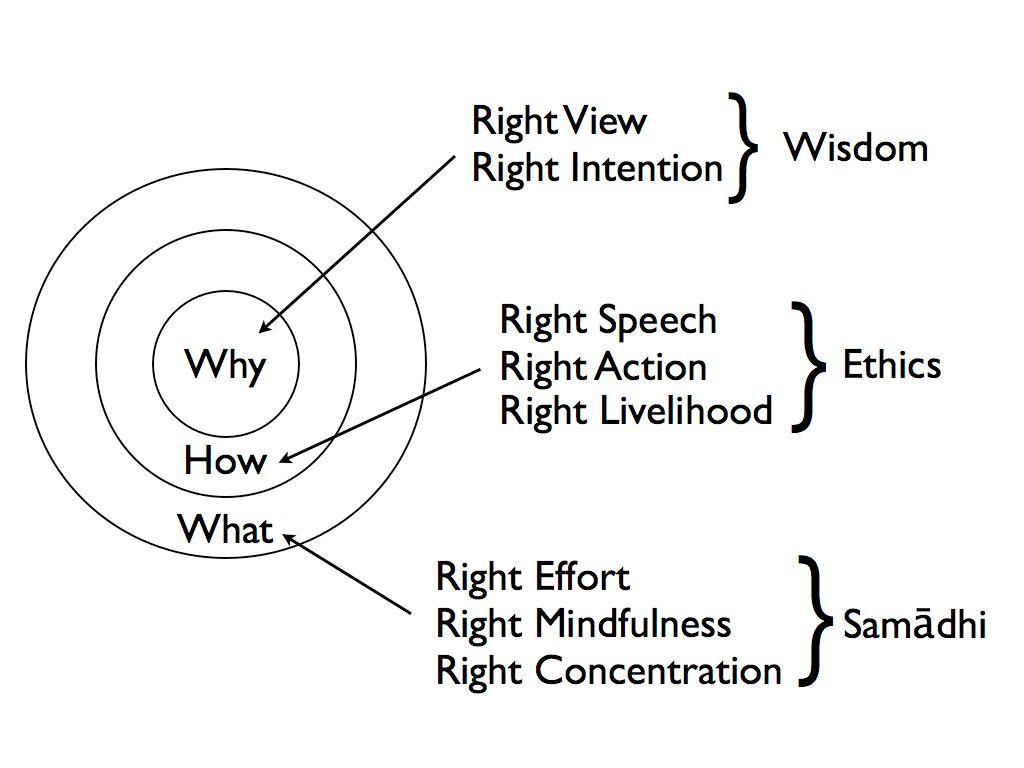
So the eight fold path describes Why a human is suffering, how to escape from suffering and after that, what he gets.
 Philosophy